
Loading...
Loading...
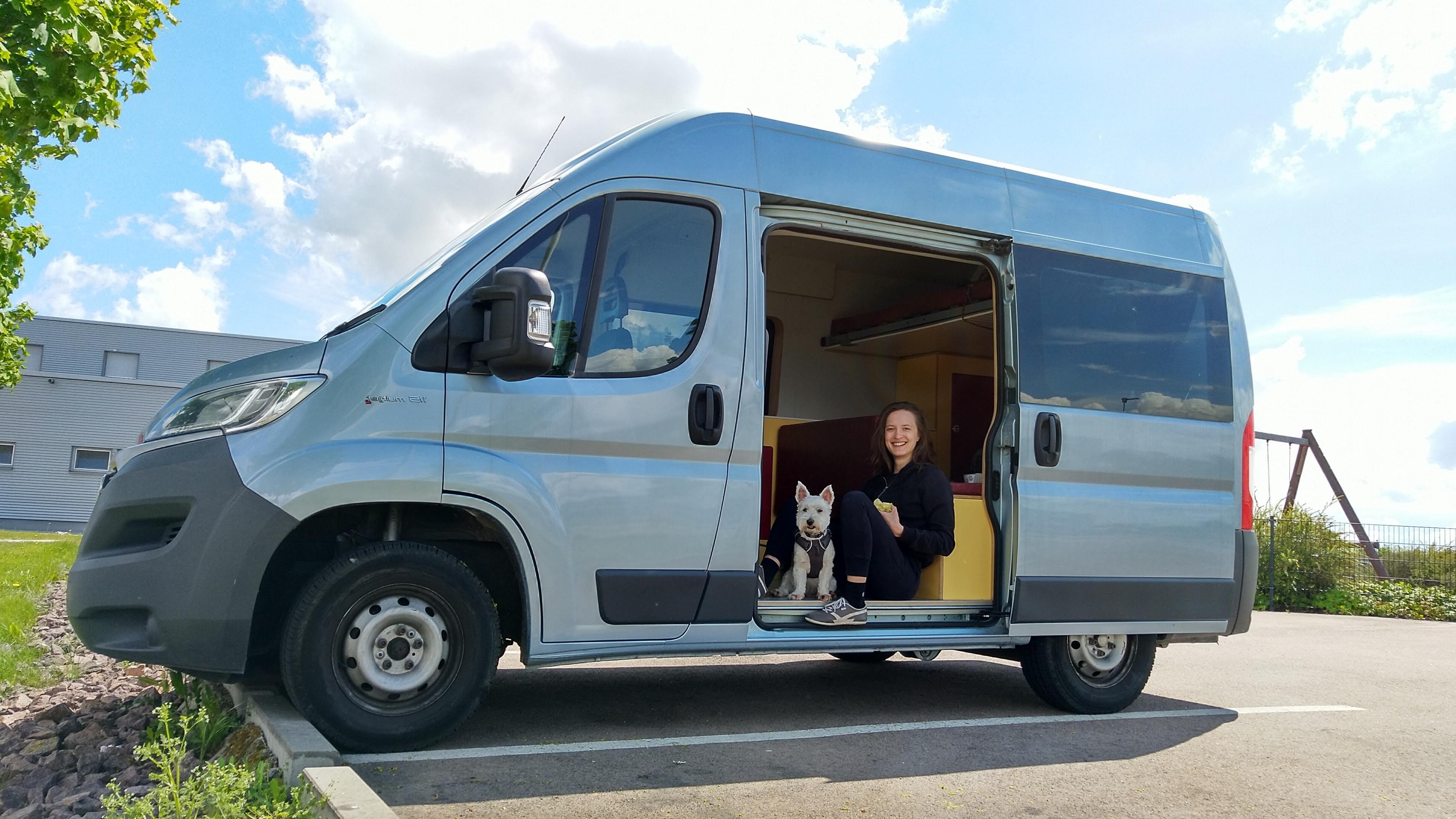
30. April 2026
You may have noticed that our last two posts — Arco and Lago d'Iseo jumped straight into the adventures — the hikes, the lakes, the islands. And we were so excited to share all of it that we skipped something rather important...
How did we actually get there? How do you prepare for your first long trip abroad with a (small) dog? What do you pack? What do you forget? And how do you survive eight hours in a car with a Westie who has opinions about everything?
Consider this the post we should have written first. I write from a small dog's perspective — but honestly, most of what follows applies to any furry traveller, regardless of size.
One small warning before we get into the packing lists: we don't have many photos from this part of the journey. Masha was busy worrying and I was busy supervising, so the camera stayed in the bag. This one is more of a read than a scroll — but we hope you'll find it useful.
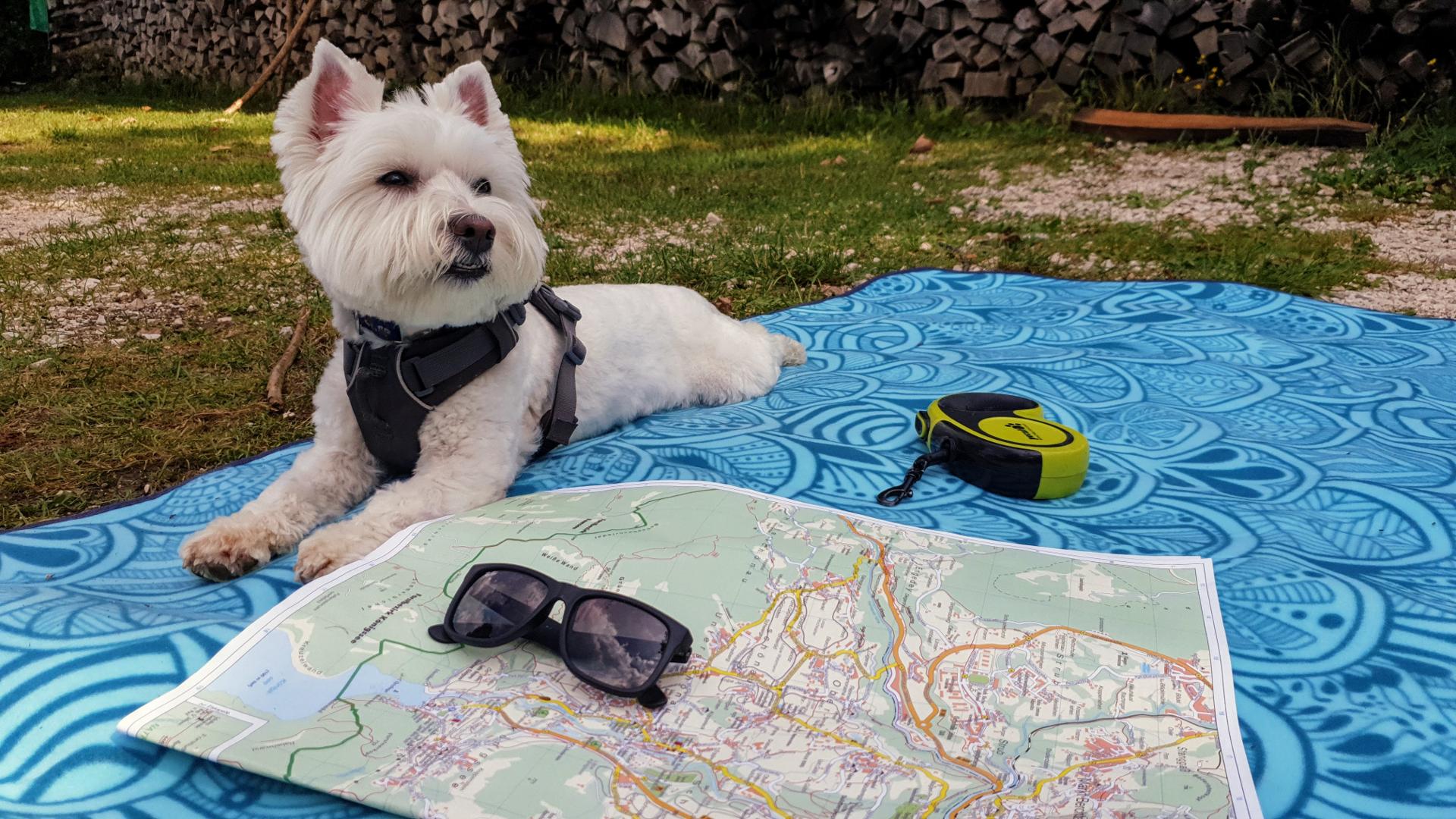
First things first. Before you cross any border with a dog, you need to make sure your paperwork is in order.
We live in Germany, and I have an EU Pet Passport — which makes travel within Europe relatively straightforward. My passport records my microchip number, vaccinations and other treatments from my vet. It travels with us wherever we go.
But here's the thing: requirements vary depending on where you're going. We have honestly never been checked at a border crossing, and we've crossed quite a few. But as they say — better safe than sorry. The consequences of getting it wrong can be serious.
So do your research before you travel, rather than assuming that a passport and a rabies vaccination covers everything everywhere. A little time spent reading before the trip can save a lot of stress at the border. And remember — country rules can change, so always check official sources close to your travel date.
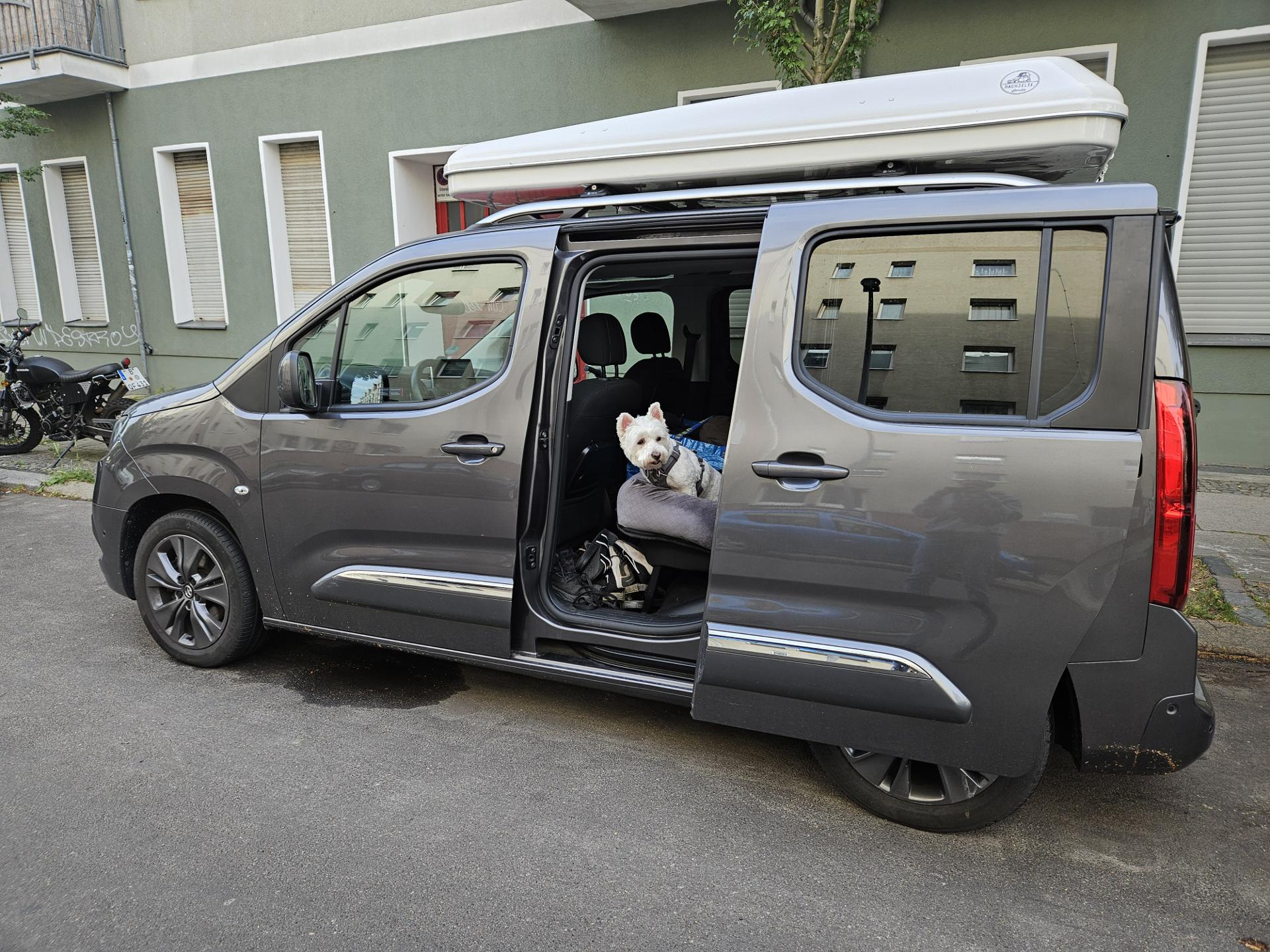
Masha was so nervous before our first big trip that she packed everything. Toys, blankets, three leashes, two coats, and things I still haven't been able to identify. I genuinely had more luggage than both humans combined. It was sweet, really — she just wanted everything to be perfect. But to be honest, we didn't need most of what we took! And over time our packing list improved and I am about to share with you what we find essential today.
🪪 The passport and paperwork. Already touched on above, but worth saying again — know the requirements of every country you're entering and make sure everything is up to date before you leave.
🪧 ID badge on the collar or harness. A small badge with your dog's name and your phone number is one of those things you hope you never need — but will be incredibly grateful for if you do, especially in an unfamiliar place where your dog doesn't know the surroundings.
🍽️ Food. If your dog is particular about food — and I have feelings about food — bring enough for the entire trip rather than hoping to find the same brand abroad, since it's rarely worth the risk of an upset stomach on top of an unfamiliar environment.
💊 Medication. Any regular medication your dog takes, plus consider prevention suited to your destination.
🦮 Harness and leash — and a spare. Things inevitably get dirty on the trail, and if your dog is anything like me, our small legs get dirty quickly on a trail, and the harness too. Having a spare harness means you can wash the muddy one and still have something clean and dry ready to go — which your humans will appreciate more than you might think.
🙊 A muzzle. You might never put it on, but ferries, trains, and other transport in some countries require you to have one with you, and finding yourself without one at a ticket booth is an experience best avoided — as we discovered in Italy. A muzzle is small enough to tuck into any bag and easy enough to forget, so make it part of your pre-trip checklist.
🫔 Towels and dog-friendly wet wipes. Mostly for the paws after muddy trails, and very much appreciated by the humans who are sharing a car with you for the next several hours.
🥢 A tick remover. One of the most underrated items on this list and genuinely important if you're spending time in nature. Ticks are everywhere in European forests and fields, and having a proper remover with you at all times rather than waiting until you reach a pharmacy is simply the sensible approach.
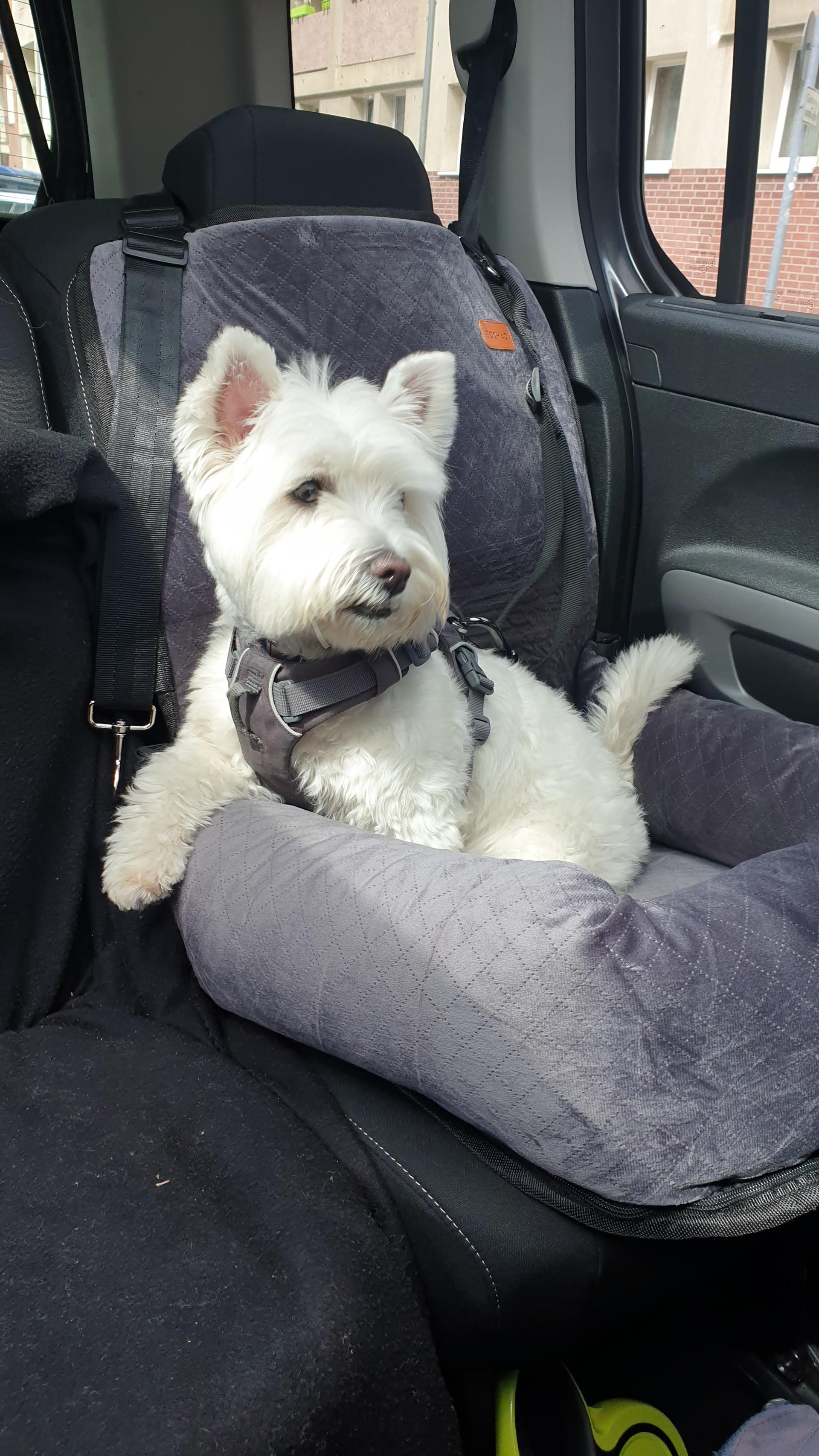
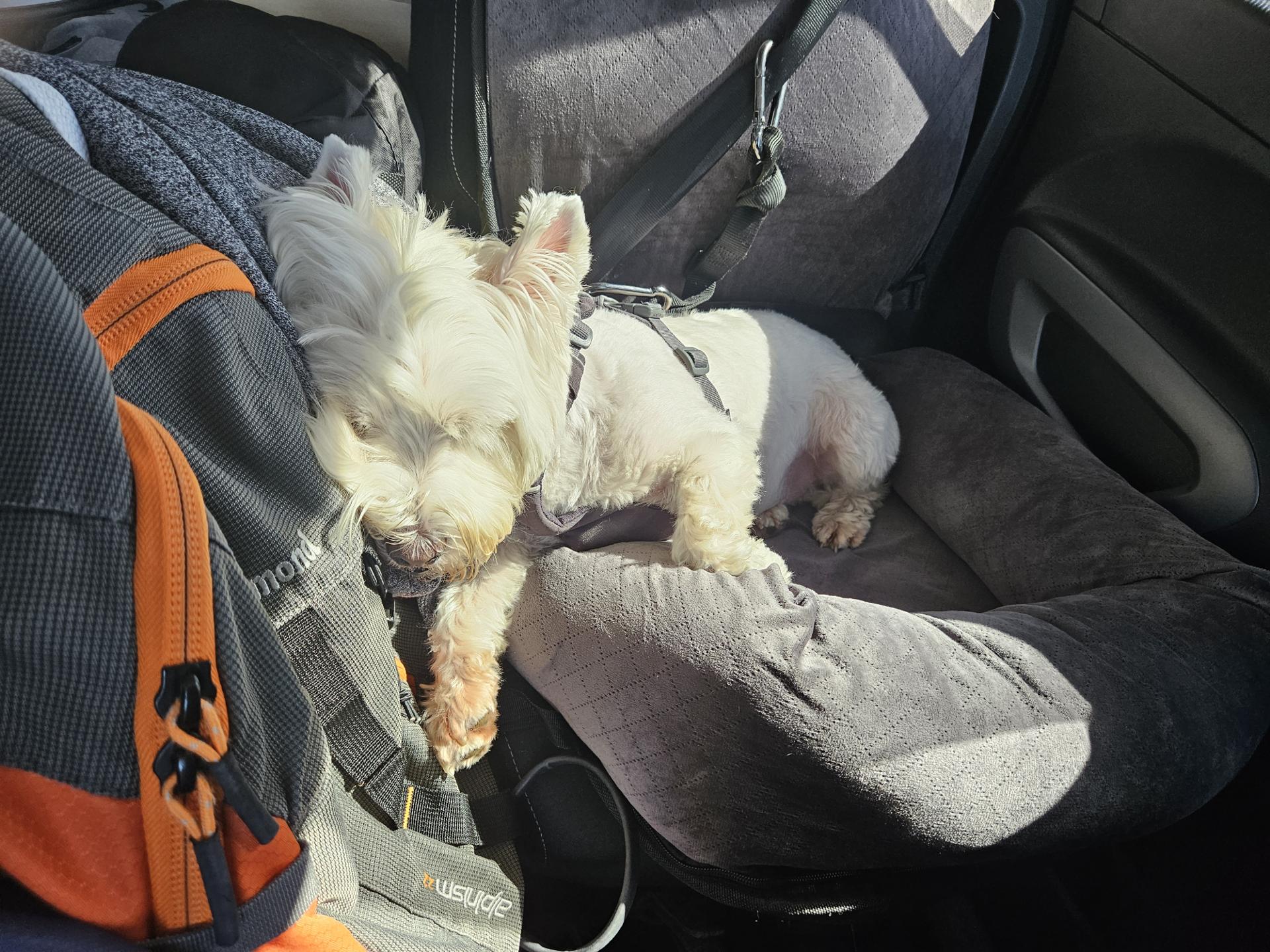
🚗 A good dog car seat. This one genuinely changed our travels! Before we had one, long drives were unsettling for everyone involved. In my seat I feel secure, comfortable, and considerably more relaxed — and using a proper dog seatbelt to secure your dog safely is both a comfort measure and an important safety one.
🛋️ Your dog's favourite place. A blanket, a bed, a specific cushion — whatever your dog associates with home and comfort. In new environments, familiar smells are incredibly calming, and there have been many times when I've been overwhelmed by a new place and couldn't settle until Masha put down my favourite blanket. It sounds like a small thing, but it really isn't.
🧋 A travel water bowl or dog water bottle. Hydration on the road matters, especially in summer, and a small collapsible bowl takes up almost no space in a bag.
🧸 Toys. Honestly optional, at least in my experience. When we travel there are so many new things to experience and explore that I barely think about toys — but if your dog finds comfort in a familiar one, there's no reason not to bring it along.
The list looks long written out like this, but in practice it all fits into one box and most of it is genuinely small. The goal isn't to pack for every possible disaster — it's just to be prepared for the trip you're actually taking.
If you're tempted to pack three of everything "just in case", remember — your dog mostly needs you, a familiar smell, and somewhere comfortable to nap.
Now for the part nobody really talks about.
Eight hours in a car with a dog who has never done a long drive before is a new experience for everyone — dog included. I'll be honest — our first long drive was not my finest hour. I started out brave and curious, tail wagging at the world going by. But somewhere past the first hour, the excitement faded and the anxiety crept in. I couldn't quite settle. I didn't understand where we were going or why it was taking so long, and Masha kept looking back at me with that worried face she has, which honestly didn't help either of us.
We found our rhythm eventually, and here's what made the biggest difference:
🚗 Take your first stop early. Not when the humans are tired or when someone needs coffee, but within the first hour of leaving home. Even ten minutes makes a real difference — getting out, sniffing some new grass, stretching my legs. Something about that first break tells me that this is an adventure worth settling into, and I travel much more calmly for the rest of the drive after that.
🚗 Stop more often than you think you need to. Every 2–3 hours at most. Dogs need to move, sniff, and stretch, and a calm and happy dog in the car is worth every extra twenty minutes at a rest stop.
💧 Offer water at every stop, especially in summer. Dogs don't always ask for it, but they need it — and it's one of the easiest things to forget when you're focused on making good time.
🍖 Don't feed a big meal before a long drive. A light stomach travels considerably better than a full one, as we discovered somewhere in Austria in a way that I won't elaborate on further.
❄️ Keep the car cool. Overheating is a real risk for small dogs, especially in summer. Make sure there's airflow throughout the journey and never leave your dog in a parked car in warm weather, even briefly.
🐶 Your dog will find their rhythm. It might take a trip or two to work out the right routine — the stop frequency, the favourite spot, the snack schedule that keeps everyone happy. But most dogs do adapt beautifully with a little patience. Now I have my seat, my blanket, and a napping schedule that I maintain with great consistency regardless of which country we happen to be driving through.
Whether you're planning to sleep in a hotel, a guesthouse, or a campsite, always check the dog policy before you book. Not everywhere that says "pet friendly" means the same thing — some places welcome dogs warmly, others tolerate them with conditions, and a few have size or breed restrictions that could catch you off guard.
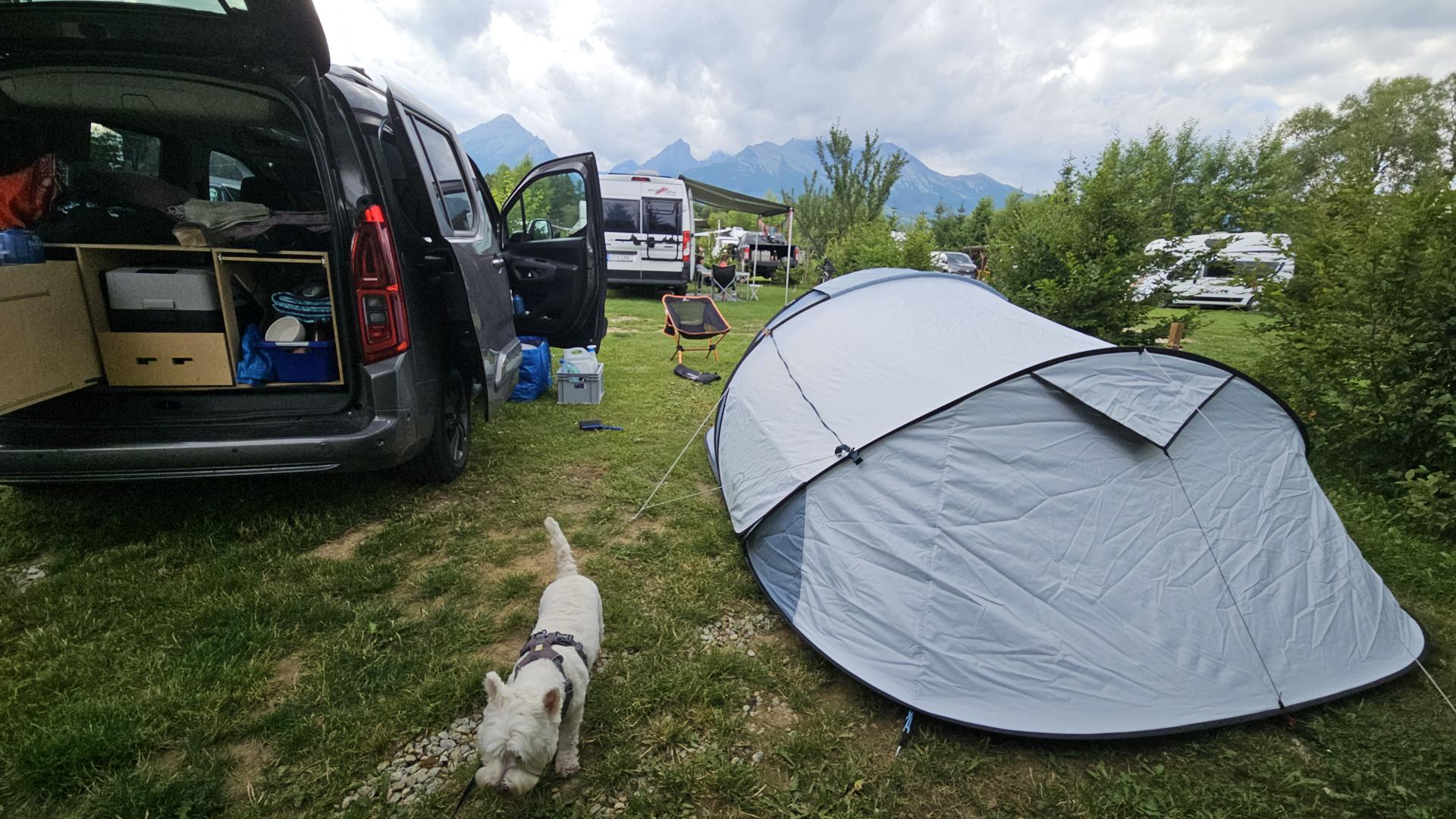
Campsites are generally wonderful for dogs — open space, nature right outside, and the freedom to come and go as you please. That said, pitches vary enormously, and some are spacious and grassy while others are small and cramped. If your dog is active and needs room to move, it's worth researching the specific campsite rather than just booking the closest one to your destination. We stayed at Camping Vela at Lago d'Iseo where our pitch was tiny but right next to the water — magical for a dog who likes to sit and observe the world, but perhaps not ideal for a more energetic dog who needed space to run.
One thing we've learned along the way: smaller campsites tend to be much more relaxed about dogs than larger commercial ones. Bigger campsites often have more regulations — designated dog-free zones, restrictions on where your dog can go — which can make the stay feel less free than you'd hoped. A small family-run campsite with a field and a friendly owner is almost always the better choice for a travelling dog.
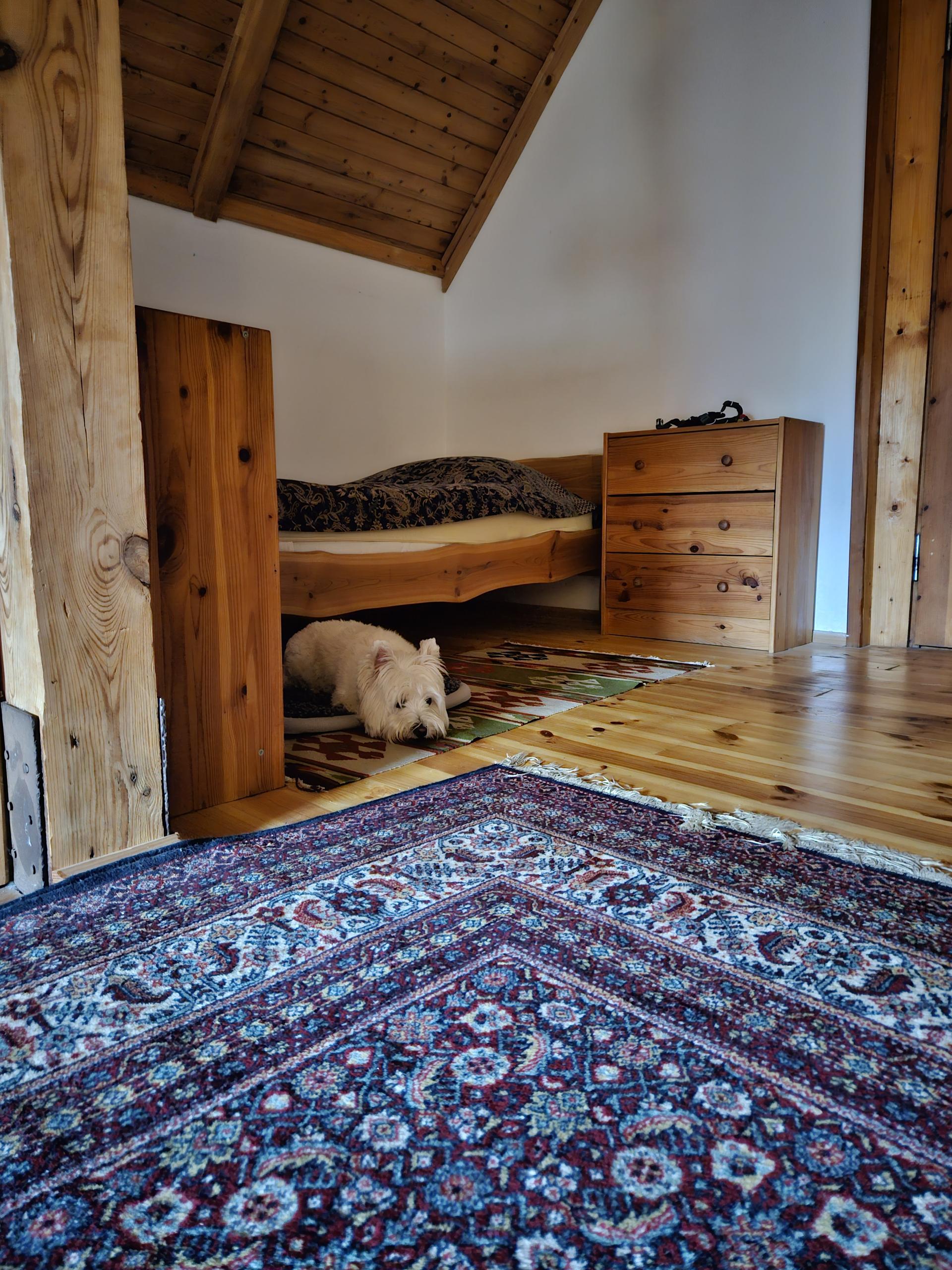
Hotels and guesthouses — always check the website upfront to confirm dogs are welcome, and if anything is unclear, a quick email goes a long way. It's worth asking specifically about size limits, whether dogs are allowed in rooms unsupervised, and whether there's outdoor space nearby. Some places also charge a pet fee, which is worth factoring into your plans.
And when you do stay somewhere — be a good guest. Keep things clean and quiet, and make it easy for the next dog owner who comes after you. Masha always washes my paws after every hike before we come back inside, and we bring our own blanket to cover the sofa — just in case I happen to leave a little trace of the trail behind. Which, occasionally, I do.
Traveling with a dog takes a little more preparation than traveling without one. There are documents to check, routines to figure out, and yes, the occasional muzzle to buy at a ferry terminal at a price that suggests the seller has been in this situation many times before.
But every bit of preparation is worth it, because on the other side of that drive there is a forest that smells like nothing you've encountered before, a mountain with a view that takes your breath away, and a small white dog who is completely, perfectly in her element — and that is worth every item on every packing list.
And one last thing that no packing list can cover — bring a good mood. I mean it. We dogs are incredibly sensitive to the energy around us, and if you spend the whole journey anxious and stressed, there is a very good chance we will be too. Yes, there is preparation to do. Yes, there are documents and checklists and things to remember. But once you're on the road, let it go. You are traveling together — your dog and you — and that is something genuinely wonderful. New smells, new places, new experiences waiting around every corner. Enjoy it. We certainly will.
We'll see you out there.
Woof, Leeloo