
Loading...
Loading...
15. Februar 2026
Let's talk about Berlin.
I have complicated feelings about this city, and I think it's only fair to be honest with you before we get to the good stuff.
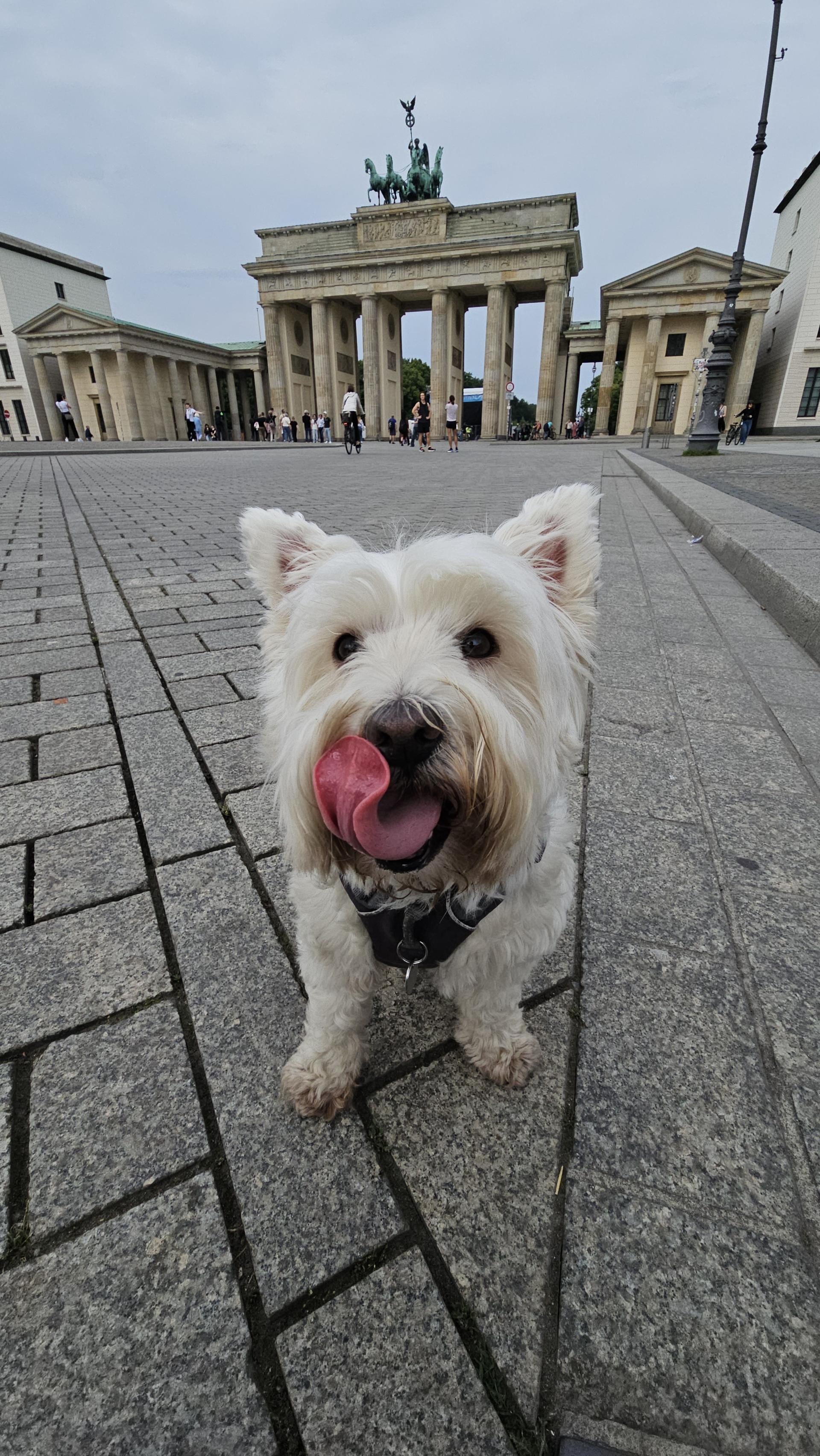
On the bright side — and there is a very bright side — Berlin is one of the most dog-friendly cities I've ever sniffed. Dogs are welcome in most cafes and restaurants. We have our favourite spots where the staff knows us by name, where a bowl of water appears before we've even settled in, and where the belly rubs are generous and unprompted. I very much enjoy sitting inside our favourite cafe, watching the world go by through the window, while Masha has her flat white. This woman has a problem. I'm concerned.
On the other hand — and I really must mention this — the streets of Berlin are incredibly dirty. I mean that in the most serious way. Broken glass, sharp debris, things I won't describe in polite company. You must watch where your pup steps and what they sniff. Every. Single. Walk. It's exhausting, and it's the one thing about city life that genuinely bothers me.
But here's where Berlin completely wins: the moment you leave those streets behind and get into the green, this city is extraordinary. Forests, lakes, rivers, open fields — all connected by public transport, all within reach. And — crucially for those of us with shorter legs — Berlin is flat. Beautifully, mercifully flat. No mountains, no hills to speak of. Perfect for beginner explorers. Perfect for small paws.
🪲 Ticks. I cannot stress this enough. Berlin's forests are full of ticks, especially between spring and autumn. Check your dog thoroughly after every forest walk — and yourself, while you're at it. Talk to your vet about tick prevention before the season starts.
🚋 Transport. The good news: dogs are welcome on all BVG public transport in Berlin. Small dogs in a carrier travel free. Larger dogs need a leash and, officially, a muzzle — though in practice this varies. A day ticket covers your dog too if they need one.
💩 Glass on city streets. I've mentioned this and I'll mention it again. Before and after forest walks, watch the pavement carefully. Berlin's streets are beautiful but rough on small paws.
💧 Water. Always bring your own, especially in summer. A collapsible bowl takes up almost no space and has saved me on more than one occasion. Good to know: many Berlin parks have drinking water fountains.
And now to the places I've sniffed — some of them many, many times — and would happily sniff again.
This is the one. If you live in Berlin and have a dog, you already know Grunewald. If you don't — go immediately. I'll wait.
The Hundeauslaufgebiet Grunewald is the largest urban off-leash dog area in Europe. Yes, Europe. Around 800 hectares of forest where dogs can run free, sniff freely, and generally live their best lives. The area around the Grunewaldsee feels like a giant dog party on weekends — dozens of dogs of every size, splashing in the lake, chasing each other through the trees, socialising at a level that would exhaust even the most extroverted human.
There's a dog beach at the lake for those who enjoy getting wet (I observe from the shore with dignity). Trails range from a quick loop around the Hundekehlesee and Grunewaldsee — about 5 km, roughly an hour and a half — to longer routes of 10–15 km through the deeper forest along the Havel.
One honest note: if your dog is shy, reactive, or not very social, the area around the lake can be overwhelming. There are a LOT of off-leash dogs here, including many large ones. If that's your situation, head to the quieter western parts of the forest — fewer dogs, same beautiful trees.
Getting there: S7 to Grunewald station, then a short walk.
Two lakes, one beautiful walk. Schlachtensee and Krumme Lanke sit next to each other in the southwest of the city, both surrounded by the Grunewald forest and connected by a short trail. Walk both lakes and you're looking at around 10 km — a very pleasant 2.5 to 3 hours at a relaxed pace. Walk just one if you want something shorter.
The paths are mostly flat and follow the shorelines closely, which means excellent sniffing opportunities at every step. Krumme Lanke has a designated dog exercise area on its northern bank. Along Schlachtensee you'll find cafes and a beer garden for the humans who need refuelling.
Dogs must be kept on leash directly at the lakeside and on the south side — but there are off-leash areas above the northern path, so check the signage as you go.
Getting there: S1 to Schlachtensee, or U3 to Krumme Lanke.
Berlin's largest lake, in the east of the city — and a completely different atmosphere from the Grunewald lakes. The full loop around Großer Müggelsee is about 19 km, which makes it more of a proper half-day adventure. Dogs must be on leash, but the paths are wide, the forest is lush, and the Müggelturm observation tower is worth a visit for the humans.
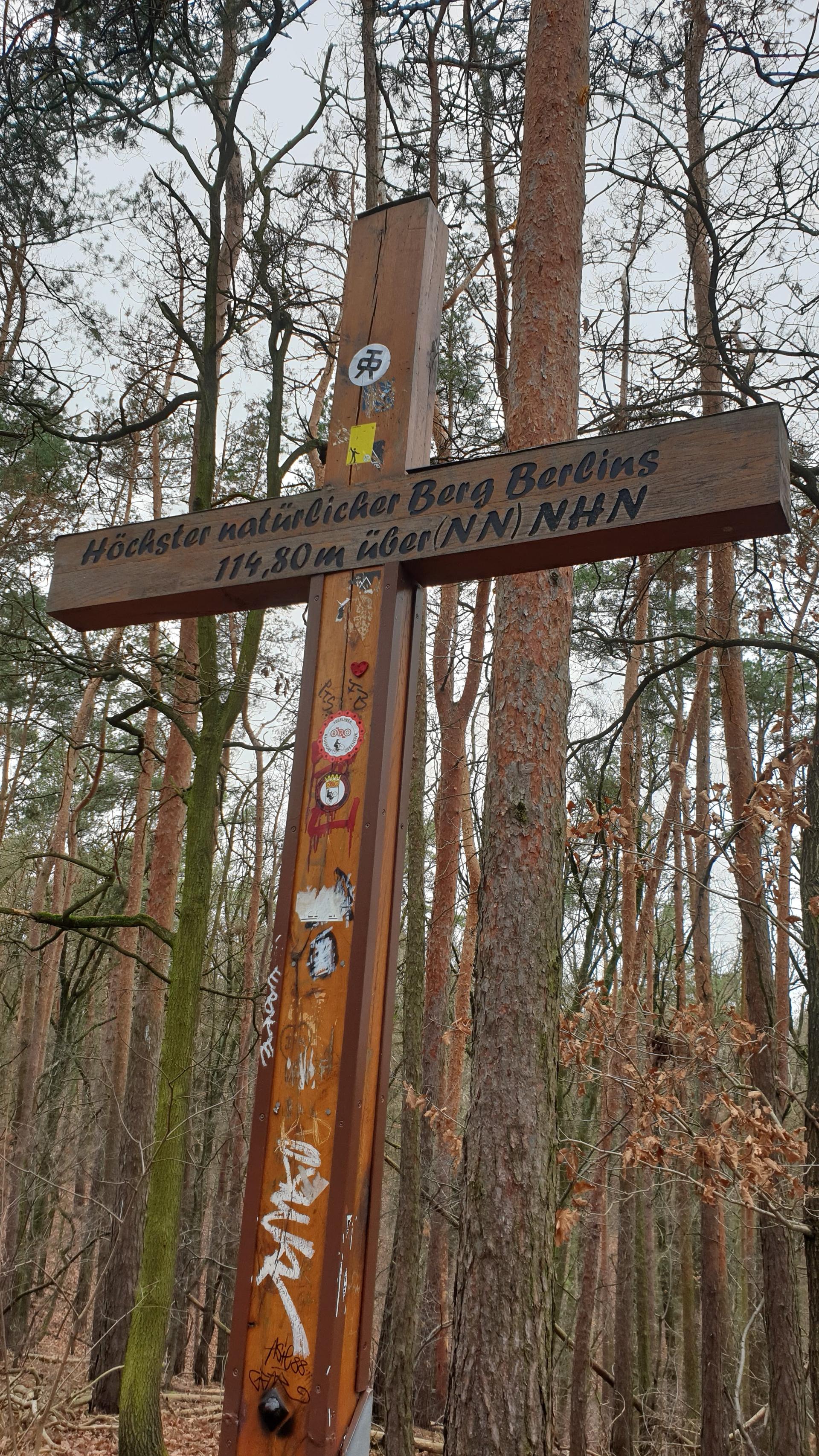
There's a ferry crossing (April–October) that adds a fun element to the route, and a beer garden at Rübezahl for a well-earned rest. The surrounding Müggelberge area also includes a hill — the "Großen Müggelberg" at 114 metres — which is technically the highest point in Berlin. We take our mountains where we can get them.
For a shorter version, start at Friedrichshagen S-Bahn station and just walk part of the shore.
Getting there: S3 to Friedrichshagen, then bus to the lake.
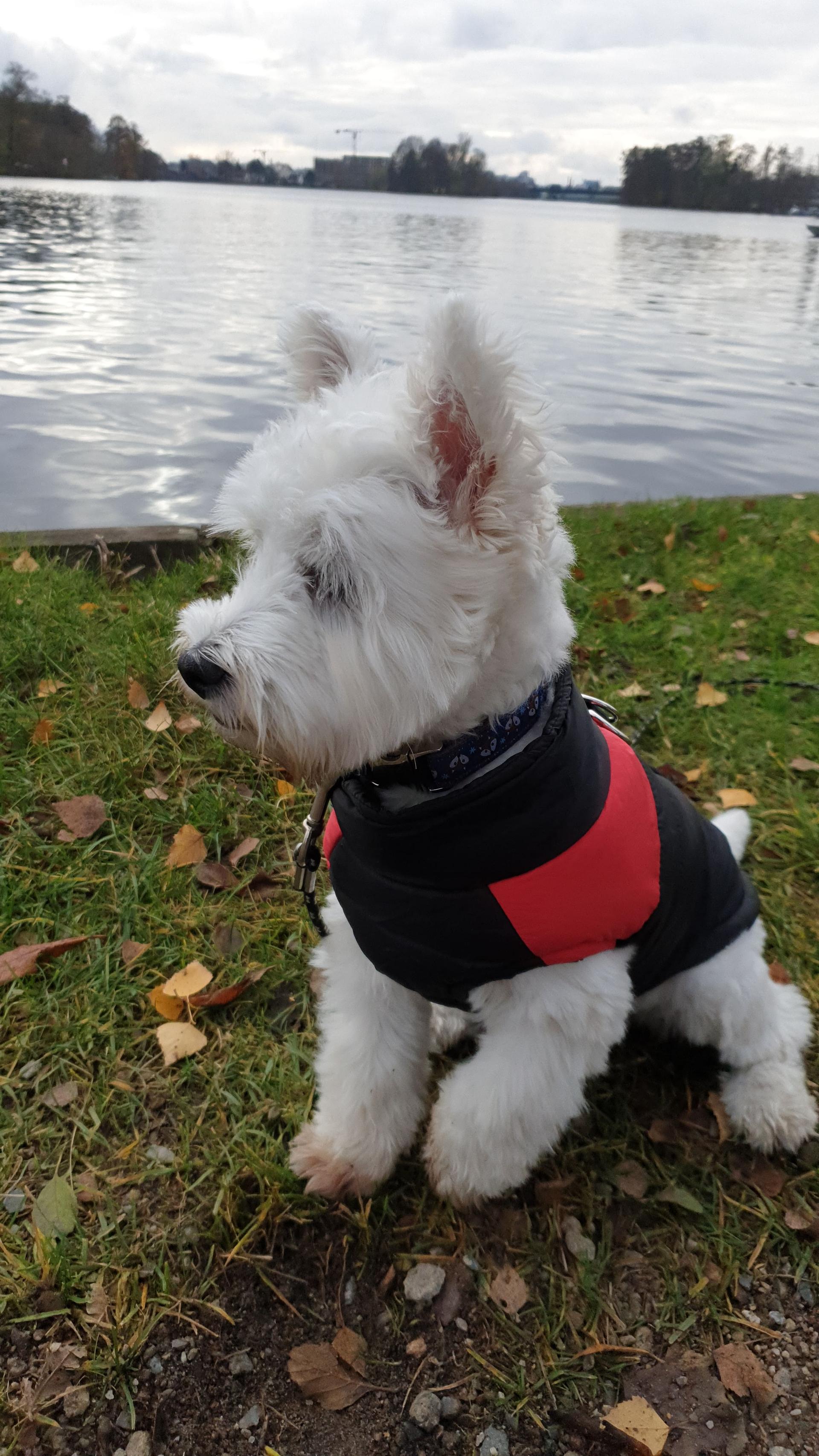
The northwest of Berlin has a quieter, less-visited feel — and the Tegeler Forst is one of my favourite places for exactly that reason. The forest is a designated landscape protection area, the paths are well-maintained, and you might encounter a wildlife enclosure with wild boar or deer along the way — so keeping your dog on leash here is genuinely a good idea.
A short loop through the Tegeler Forst is around 5 km. The longer lake loop — combining Tegeler See with the Havel shoreline — stretches to about 11 km and takes 2.5–3 hours. There's also a dog agility park Hundeparcours.
A special highlight: Dicke Marie — Berlin's oldest tree, an oak estimated to be over 900 years old — is along this route. I paid my respects. She smelled magnificent.
Getting there: U6 to Alt-Tegel, or S-Bahn to Tegel.
Technically not Berlin, but close enough to deserve a mention — and worth every minute of the short train ride. Potsdam's forests, lakes, and palace parks offer a very different feel from the city. The paths around Park Sanssouci and along the Havel are beautiful, and the Babelsberg area combines history with proper forest walks.
We've spent full days here and barely covered everything. Consider it a proper day trip rather than a quick outing — pack treats, pack water, and give yourself time.
Getting there: S7 to Potsdam Hauptbahnhof, or regional train RE1.
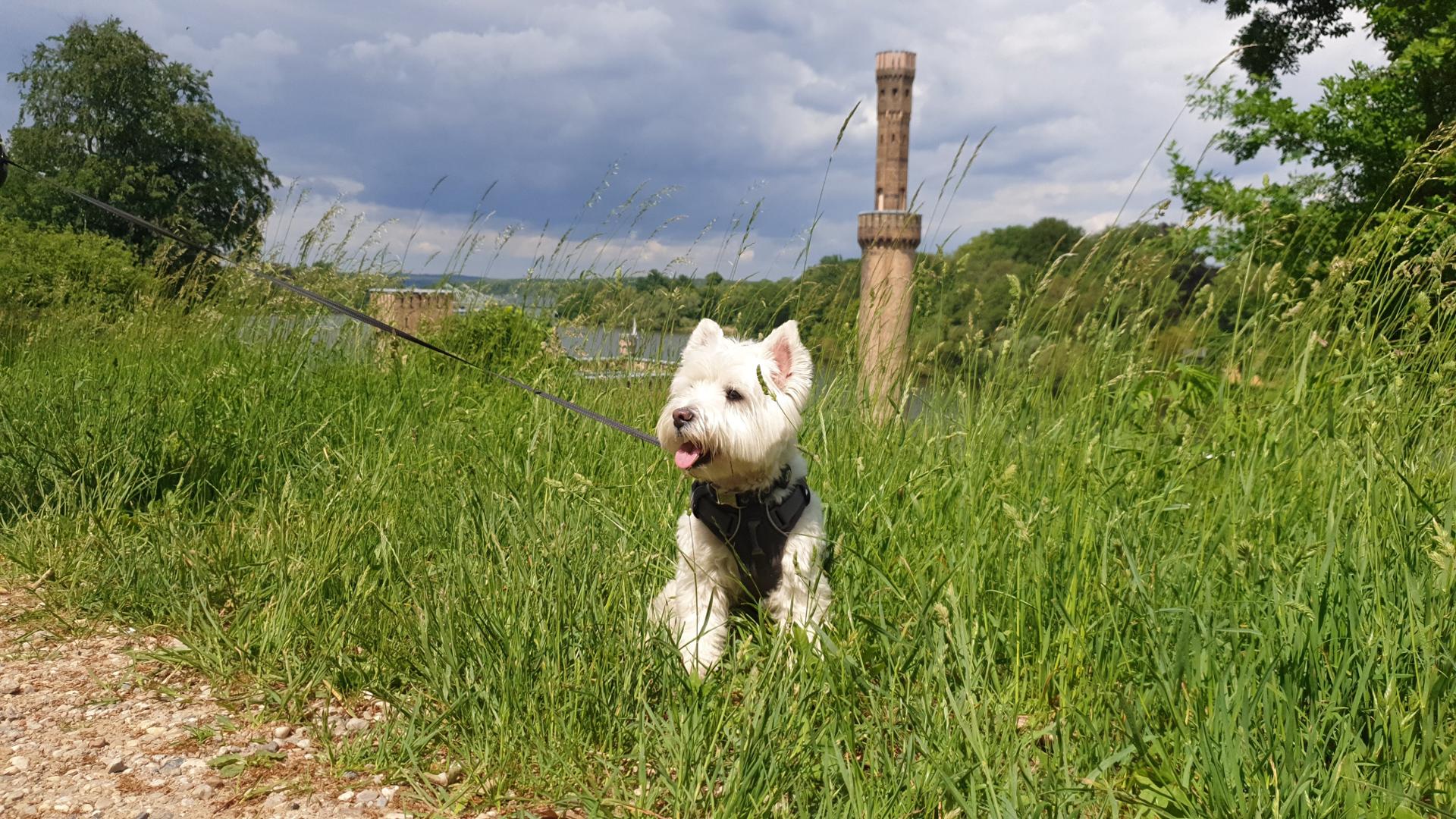
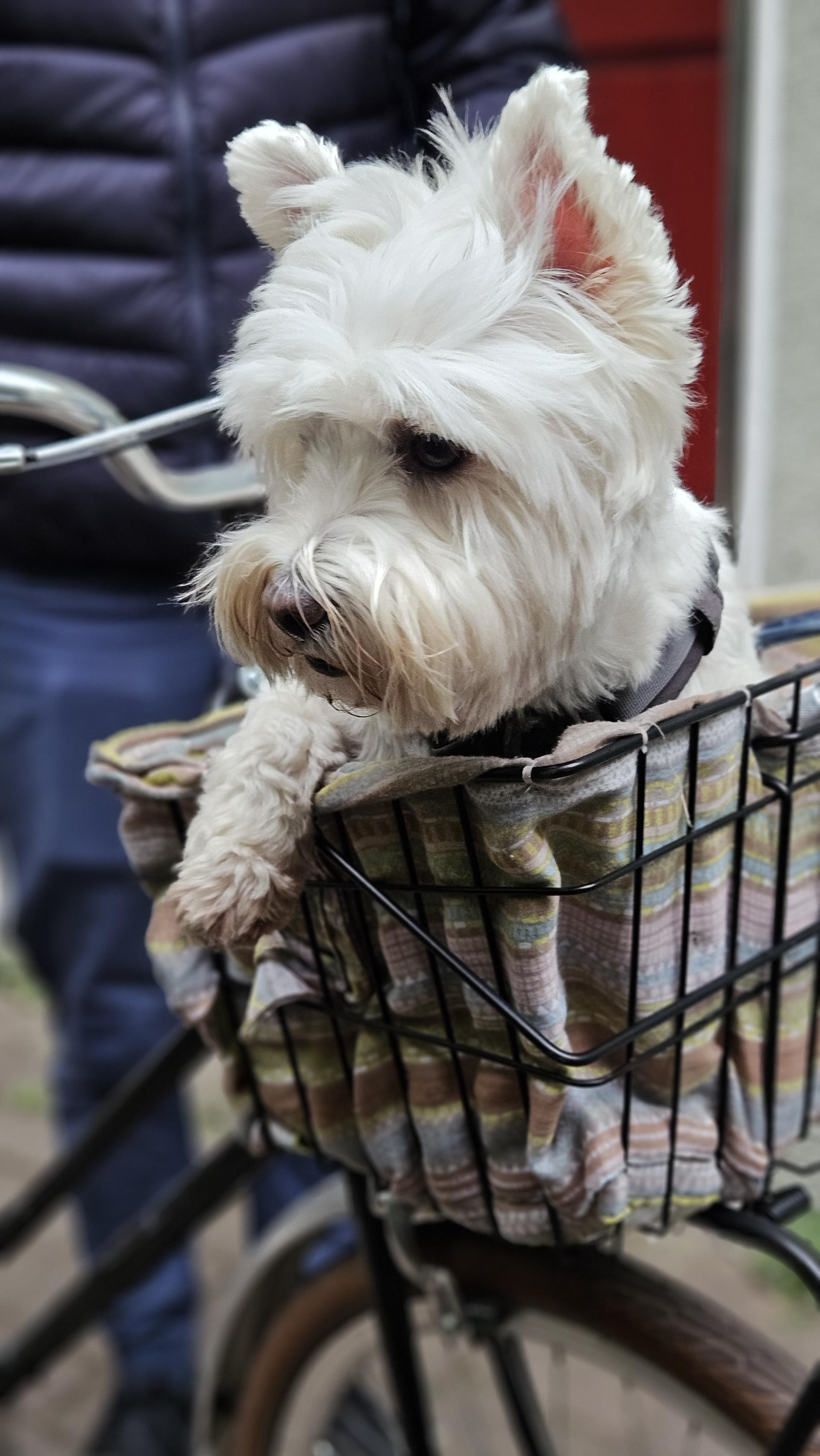
Sometimes you don't want a day trip. Sometimes you just want a good walk — or a bike ride with your dog in the basket, which is one of the nicer advantages of having a small companion. Berlin has you covered either way.
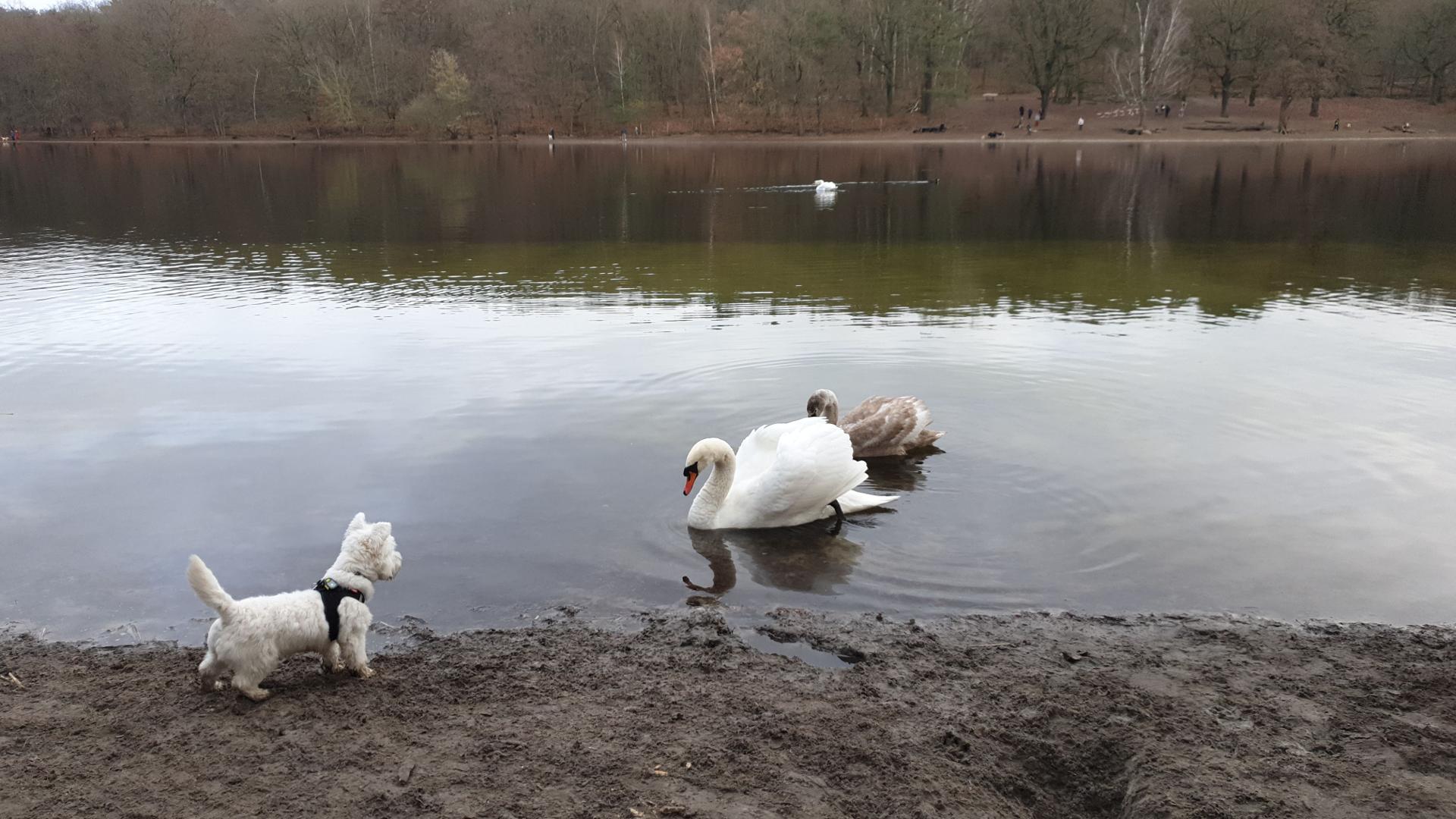
Berlin's oldest public park and my personal favourites for a city walk. There are proper forest trails here, ponds with ducks (I observe from a safe distance, having learned from the swan incident), a fairytale fountain, and a designated off-leash dog area. The hills — built from WWII rubble — give you the closest thing to elevation you'll find inside the city ring. A full loop through the park is about 3–4 km depending on how many detours you take.
What Central Park is to New York, Tiergarten is to Berlin. Over 200 hectares of winding paths, ponds, statues, and shaded forest right in the middle of the city. You could walk for hours and not cover everything.
Important note: dogs must be on leash at all times here — rangers do check, and fines can be up to €60. But it's still a wonderful walk, especially on weekday mornings when it's calm. The Café am Neuen See has lakeside tables and is very welcoming to dogs.
Berlin's second largest park, with a beautiful stretch along the Spree river and a connecting forest path through Plänterwald. A relaxed loop combining both is around 5–6 km. The paths are wide and easy, the riverside walk is lovely, and there's a Soviet War Memorial that's worth a slow stroll through. The Zenner beer garden along the way is a classic stop for the humans. Dogs must be kept on leash, but with so much to sniff along the river and through the forest, nobody is complaining.
Getting there: S-Bahn to Treptower Park station.
A former airport, now one of Berlin's most unusual and beloved open spaces. The scale of it is genuinely strange — you walk along old runways with nothing but sky around you. There are three fenced off-leash dog areas (one at the western end, two at the east), complete with agility equipment. Outside those areas, dogs must be leashed.
It's not a forest walk — there are no trees to speak of — but on a sunny day, the open space and the energy of the place is something special. Very popular with locals, which means your dog will have no shortage of social opportunities.
Berlin gave us our first forest walks. It's where I first understood what it meant to be a dog out in the wild — or the closest thing to wild you can find within a city. For that, I'm grateful.
Even if the streets are terrible.
Woof, Leeloo